Software Art

Audiovisual Parameters. Paul Prudence’s “natural” Structures

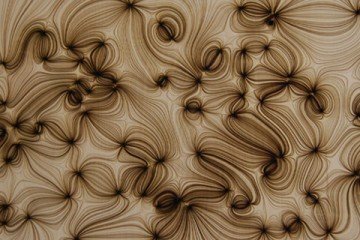
Paul Prudence, real-time visual performer, works with procedural systems by exploring structures, graphic and generative potentialities of audiovisual systems. He is extraordinary, educated, intelligent, open-minded and capable of living in more worlds simultaneously, from the live-based media to the graphic art world, keeping his eyes always open wide on forms and composition rules, things that are not so easy to find in the turmoil of modern digital creativity. He is one of those hybrid figures standing on the edge of art and design who are now resorting to data visualization in order to describe, at the crossroads of art and algorithms, the storm of information surrounding us. The results are often unexpected.... READ MORE...


The Fine Art Of Glitches. Cheats And Errors

When a new generation of artists looks at Marcel Duchamp famous painting Nude Descending a Staircase, No. 2 from 1912 will they then say: Whoa, look an early example of glitch art! When Duchamp made his painting he left the traces from the person going done the stairs on the canvas. A similar visual effect could be experienced when you have a corrupt graphic card which is not erasing the traces from the moving object on the screen.... READ MORE...

Transmediale 11

transmediale.11, the International Festival of Art and Digital Culture is taking place at the Haus der Kulturen der Welt in Berlin from the 1st to the 6th of February, 2011. It is devoted to the radical changes of our digital age. With the title RESPONSE:ABILITY transmediale.11 calls for joint reflection on how we live with and on the Internet today.... READ MORE...

Pain Is Not The Game. Virtual And Real In Videogame Art

When the German artists Volker Morawe and Tilman Reiff were young they used to play games that deal with punishment in some ways. The most popular was probably Folter-Mau-Mau Tilma Reiff explains. A simple card game where the looser would be punished according to the cards that remains in his hand. We remembered the special tension that arose from the threat of possible punishment and the excitement that came with it. The relief if you came away unpunished. It simply adds a lot of feelings to the experience.... READ MORE...

The Machine That Makes Art. Form+code In Art, Design And Architecture

A perfect candidate for this role is FORM + CODE, a book by Casey Reas, Chandler McWilliams and LUST, recently published by Princeton Architectural Press. Contents are clearly expressed through an historical overview on the code development in electronic art, and in some of its conceptual art natural language programming forerunners(based on instructions series set up not for the machines but for the public). The graphic layout is a well-kept and an inseparable part of the publishing project, including a selection of pieces of work and breathtaking images (at a very reasonable price, it must be said).... READ MORE...

Mapping Time Exhibition

This fall, the gallery@calit2 presents "Mapping Time," an exhibition by Software Studies Initiative (softwarestudies.com). The lab is directed by Lev Manovich, UCSD Professor of Visual Arts and Calit2 researcher; its core participants are Jeremy Douglass (Calit2 post-doctoral researcher) and William Huber (PhD student in Visual Arts). In addition, undergraduate and graduate students and faculty from the departments of Electrical and Computer Engineering, Computer Science and Engineering, Communication, Visual Arts, and Calit2 participate in the lab's work.... READ MORE...

The root of the root

This exhibition showcases three artists working with generative code to create abstract and reactive works. Marius Watz and Paul Prudence have been contributing to the dialogue for computational art since 2005 with seminal essays, some of the foremost blogs and ground-breaking software. As a seminal member of the processing community, Marius Watz has, in many ways, defined part of the aesthetic associated with code-based art. Paul Prudence works with VVVV and with visual feedback systems to create audio-visual performances. Aaron Meyers is an artist and programmer using generative strategies in the creation of software and moving image. He is currently a fellow at the Eyebeam Art & Technology center where he recently led the Visual Music Collaborative workshop in collaboration with Ghostly International.... READ MORE...

Cao Fei: Demolishing The Virtual. Rmb City And The Crisis Of Art-reality

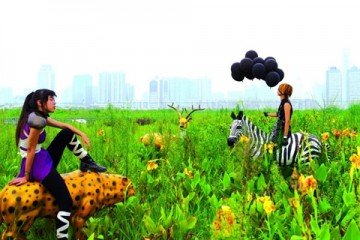
Chinese artist Cao Fei formally launched her last major project, RMB City, almost two years ago in January 2009. Nearing the end of its predetermined lifespan, the Second Life platform should come to an end within the next several months. At this juncture I have been attempting to take the pulse of the virtual community as a whole, speaking with current and former collaborators on RMB City, collectors, writers, and other interested observers in order to figure out how to measure the success or failure of the digital metropolis. See below for a summary of the findings so far; next month in this space we will continue this survey with a debriefing on Chinese art in Second Life... READ MORE...

Human Screens. An Interview With Chris O’shea

Chris O'Shea is one of the most popular international graphic and interaction designer, based in London, whose work focuses on the possible interaction mechanisms between man and machine, as well as on the design of artistic works, often by dimension of play and irony, that bring into question our sense perceptions and common experiences of the outside world.... READ MORE...

Beyond Signal Reclining Nude

Oltre che con i disegni, Jenny Pickett mette in discussione il genere del nudo con un approccio interdisciplinare. Ritratti e disegni vengono sviluppati attraverso il suono e l'immagine. Forme astratte che diventano tessuti da arredamento. Reclining Nude è una serie di sculture sonore tappezzate che si riferiscono al corpo decostruito attraverso l'oggettivazione e/o la disumanizzazione ottenute con svariati mezzi – Il corpo viene ricostruito attraverso disegni sonori spaziali o si rimaterializza sottoforma di vibrazioni avvertite dallo spettatore quando entra in contatto con alcune opere... READ MORE...

Space Invaders Art in the computer game environment

In Space Invaders: Art in the Computer Game Environment the Netherlands Media Art Institute brings art and games culture together. In an artistic, playful yet serious manner, Space Invaders reveals the influence of games on art and society. This group exhibition with Dutch and international media artists examines the increasing blurring of the boundaries between game worlds and reality.... READ MORE...