Networking

Geert Lovink: List Culture And The Art Of Moderation

Geert Lovink is one of the most influential cultures of the net worldwide. He is a critic and a theorist, he has been interested for years in texts and essays about the new media and network culture, and among his most recent projects the creation of the Institute of Network Cultures in Amsterdam is worth to be mentioned. This institute works on critical analysis of the Internet, and its aim is to help actively the development and the divulgation of studies and discussions on network topics, even through the organisation of conferences, and publications whose aim is to stimulate dialogue and online sharing.... READ MORE...

Paraflows 09

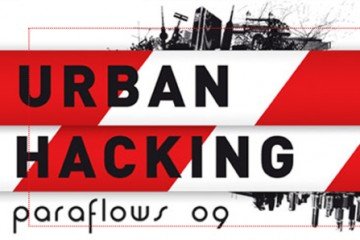
The city of Vienna has a long tradition of interventions and actions in the public space. With this year's topic URBAN HACKING, the fourth paraflows festival continues this artistic investigation of the public and urban space of living. What is more, paraflows 09 will shed light on the role played by digital media when it comes to exploring, questioning, and shaping the urban infrastructure.... READ MORE...

Our Right To Internet: Interview With Alessandro Gilioli

I would say that it was almost inevitable. To live and work in a country, as democratic as it seems, where the interdependent rapport between politics and mass media is much tighter than in any other country in the world (excluding those openly totalitarian regimes that we mentioned for example in last month's Persepolis 2.0 article, of course) and does not allow for libertarian utopias of any sort if they discuss any subject that is a fundamental part of democracy, like the freedom of the Press, the right to an opinion, the freedom of thought.... READ MORE...

Non-locality: Myths And Metaphors In Networked Art And Quantum Systems

Quantum particle systems seem to possess the ability to communicate instantaneously with each other, defying our classical understanding of space and distance. This feature of the quantum world, known as non-locality, is often used to describe the World Wide Web, and particularly interactive networked art, which seems to collapses space into mouse clicks and links. But is it really applicable?... READ MORE...

Persepolis 2.0: Creative Support To Iran

I decided therefore to use Digicult as spokeman and create a short-circuit between some artistic and creative news and an important political event, i.e. the crisis in Iran. I wanted to make Digicult a small instrument of support, anyway without changing its roots and its cultural and editorial aim. Moreover I discovered the project Persepolis 2.0: it is a re-editing project by the graphic novel Persepolis created by the Iranian Marjane Satrapi which has had a lot of international success and offers a geographic and editorial comparison between the Iranian Revolution of 1979 (which is part of the original history) and what is happening nowadays in the Country. For this reason I decided first of all to support the project as requested, i.e. copying the Html code of the graphic tables on Digicult's homepage (all readers are kindly requested to do the same) and secondly to widespread it through Facebook. Last but not least I tried to get an interview for this edition of Digimag. It is an interview made in 24 hours, just before the publication of the newspaper, but it honours us and we hope it can be another small anchor to help the struggling Iranian people... READ MORE...

Vlogging, Networked Cinematic Poetics

Hegemonic systems of mainstream culture depict the World Wide Web as host to a number of large, central (but none-the-less global) sites controlled by a few corporate bodies. The names are ubiquitous for anyone trying to explore the modern media world: Facebook, Vimeo, Twitter, YouTube, and others that have either fallen by the wayside or are just bobbing below the surface of our awareness. These platforms all have their place of course, and most of us are making use of them.... READ MORE...

The Aware And Creative Technology Of Goto10

The collective GOTO10 (the answers of this interview were elaborated with the name GOTO10 by Karsten Gebbert, Claude Heiland-Allen, Aymeric Mansoux, Marloes de Valk and Thomas Vriet), active internationally for years in the technological activist environment, is a good example of how a group of programmer-artists manages to face and win against the swamps of our time through a creative, aware and thought-out use of technology. I interviewed them so that they could tell us about some aspects of their complex project.... READ MORE...

_augmentology 1[l]0[l]1_:interface Between Two Worlds

The _Augmentology 1[L]0[L]1_ project reaches out into a multitude of networked environments, like a multi-tendrilled creature, it explores and reports back information to a central hub, located at the _Augmentology 1[L]0[L]1_ blog. Existing in the virtual, the task is to explore other synthetic worlds and attempt to reflect back something of the nature of living within them and our own world. The resultant collection of projects and ideas can be considered a 'Synthetic Reality Manual' as Mez Breeze, who initiated the project, describes it.... READ MORE...

The Chinese Nightmare?

The Chinese Dream is book of more than 700 pages about the urbanization in China, published by the Dutch editor NAI Publishers. This project of colossal dimensions is on the shoulders of an architect Neville Mars, and a researcher Adrian Hornsby and the Dynamic City Foundation. The disproportionate growth of the agglomerations in China is at the centre of this publication... READ MORE...

In Video Collaboration

Towards the end of the '90s, long before the whole world found out about web 2.0, social networking and co-creation online, Furthernoise/Furtherfield, a collective of activists and radical artists that was founded in the UK by Marc Garret and Ruth Catlow, focused their activity on concepts such as horizontal collaboration, sharing, involvement, openness, co-creation. In short they were turning the culture of individualism and D.I.Y. (do it yourself) into a culture of community and D.I.W.O. (do it with others), and artistic collaboration from contextual into relational.... READ MORE...